Meet the Team
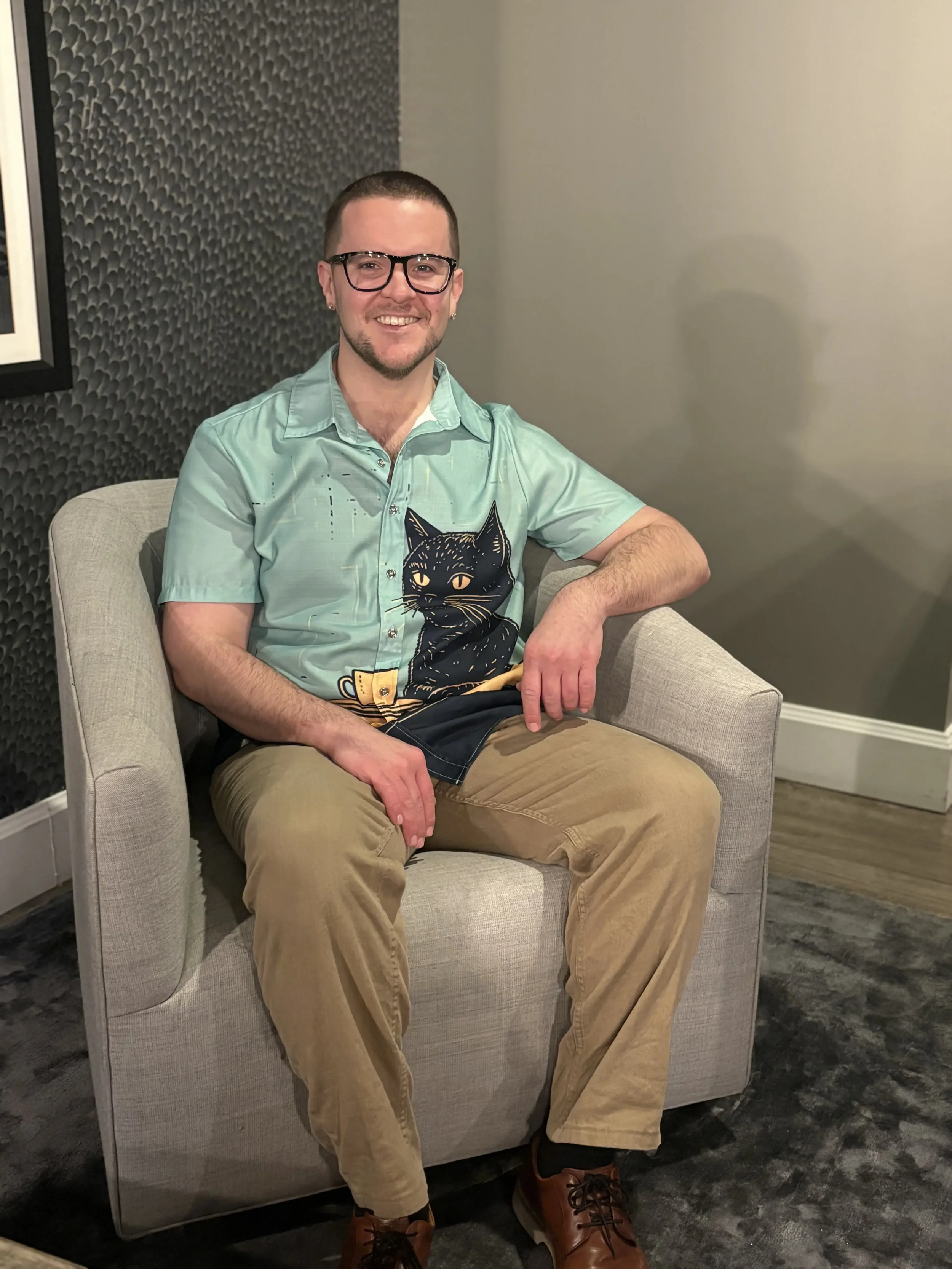
Andrew Bingman, PsyD
Clinical PsychologistDr. Bingman is a gay therapist in Chicago who enjoys pop music, slasher movies, psychodynamic theory, and the Real Housewives franchise.
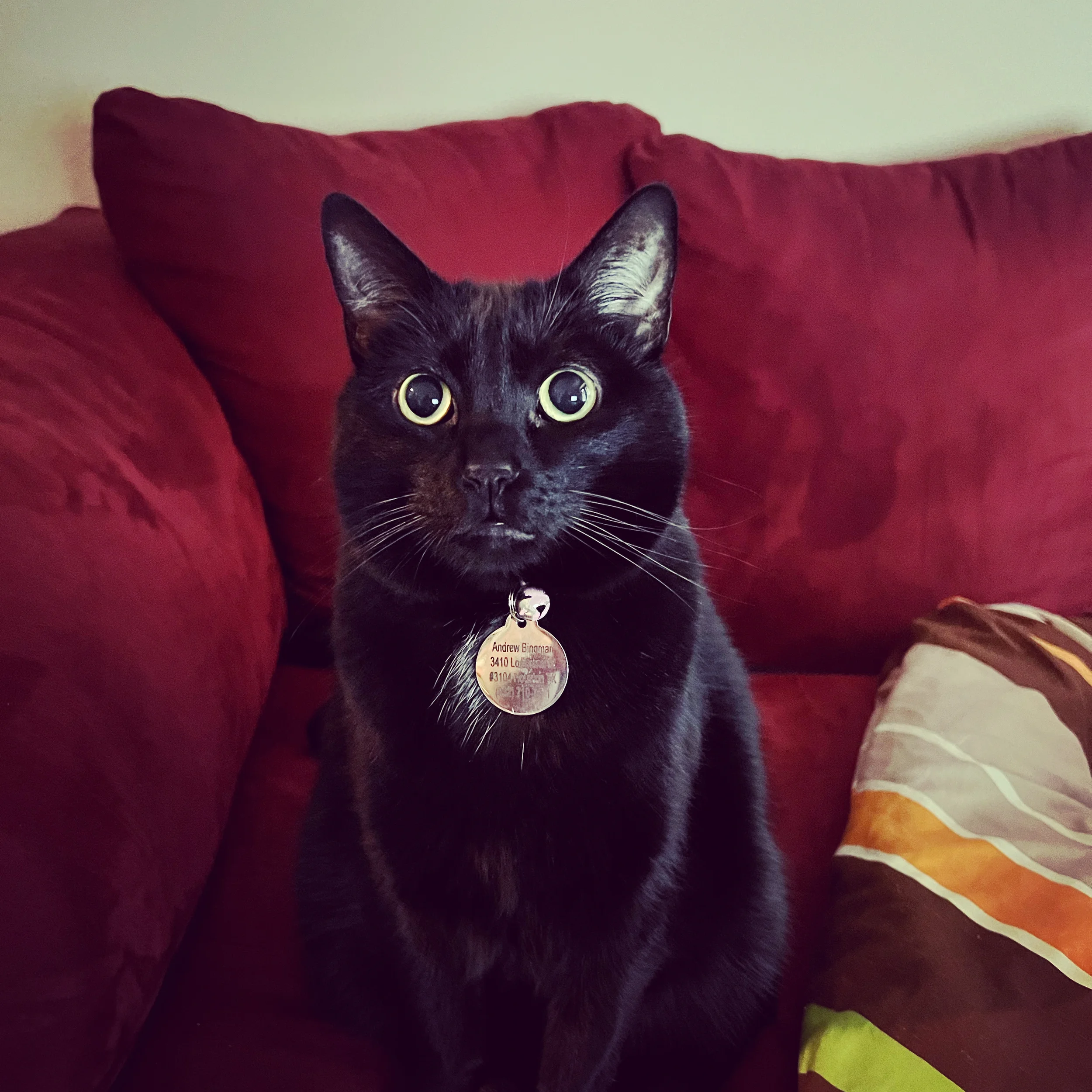
Executive AssistantQueen
Queen is a domestic shorthair who enjoys naps and toys dangling from strings. Her favorite movie is Batman Returns starring Michelle Pfeiffer as Catwoman.
My Psychologist Origin Story
During my sophomore year of high school, I enrolled in my first psychology course. On the first day of class, we learned about the fundamental attribution error, which refers to the tendency for individuals to ascribe other people’s behavior to personality traits while ascribing their own behavior to situational circumstances. My teacher used driving as an example to illustrate this concept. When another person cuts you off while driving, you are likely to assume that person is impatient, reckless, or self-centered. However, if you cut someone else off while driving, you are likely to rationalize this as an innocent mistake. Given the relatability of this scenario (among other things, I was voted “Worst Driver” in my high school yearbook), I was readily able to apply this concept to my own lived experience, and I left that first psychology class with new language that allowed me to better understand myself and others. To put it plainly, I was hooked and couldn’t wait to learn more.
Later in that same year, I watched the holiday film It’s a Wonderful Life for the first of many times. In case you haven’t seen it (in which case, I insist you stop what you’re doing and watch it this minute!), the premise of the film is that the protagonist, George Bailey, receives an opportunity to see what the world would have been like had he never been born. Through this experience, he comes to recognize the profound impact that he has had on the people in his life. As the film reached its conclusion, I knew that I wanted to grow up to be like George Bailey and to have a similar impact on my community as he had on Bedford Falls. Combining my newly discovered passion for psychology with my desire to have a positive impact on the people around me, I decided at the age of sixteen that I wanted to become a clinical psychologist.
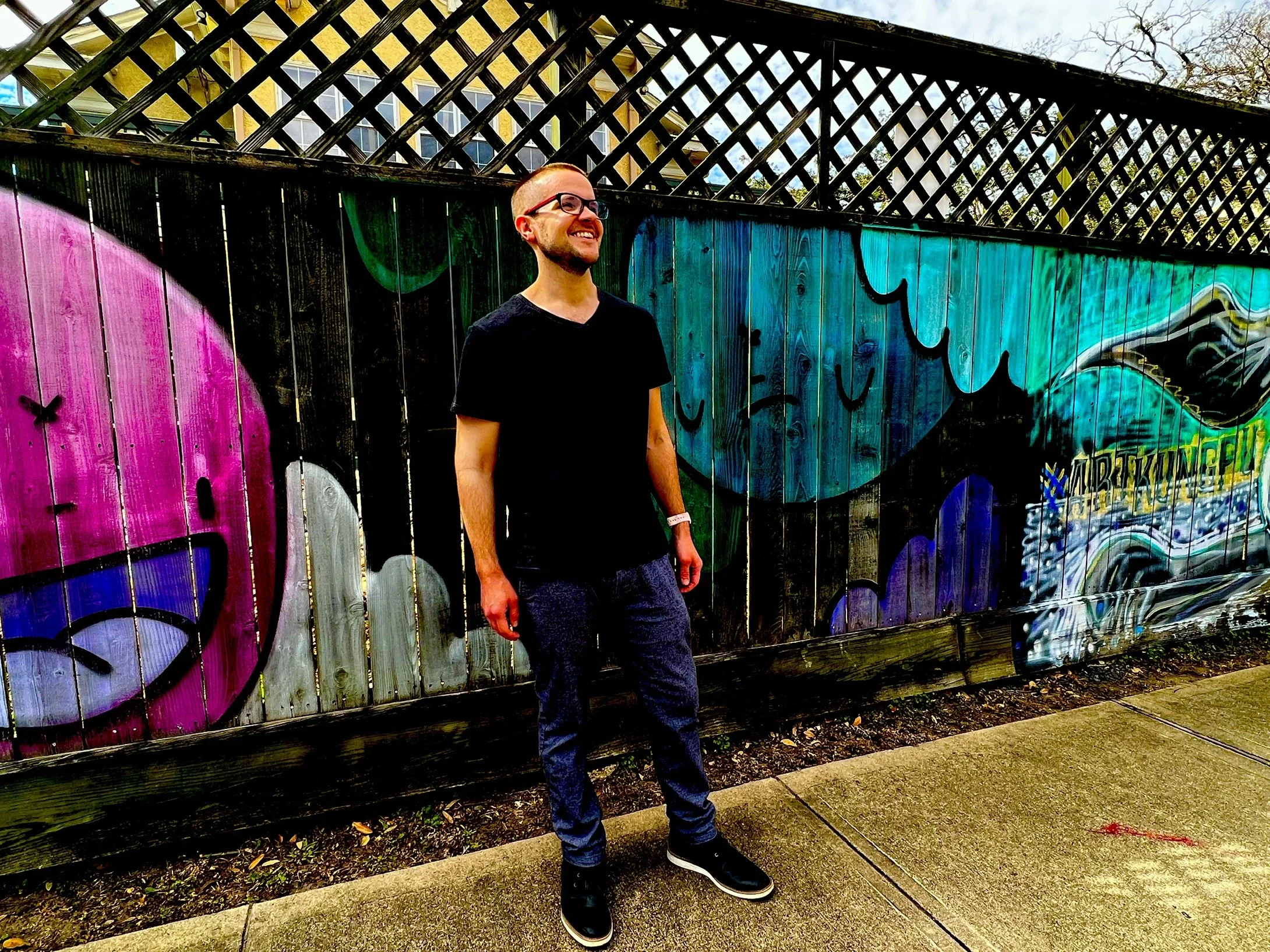
Education, Training, and Experience
After graduating high school, I left my small, rural hometown in Ohio to attend Tulane University in New Orleans, where I discovered the joys of beignets, Mardi Gras parades, and napping in between classes. During my first two years of college, I began a lifelong process of coming out to friends and family members as a gay man, and I became increasingly active in the LGBTQIA+ community. In 2010, I graduated from Tulane, not only with a bachelor’s of science in Psychology and Sociology, but also with a clearer understanding of my identity and a desire to give back to the community that had taken me under its wings and given me my first true taste of belonging and acceptance.
In 2011, I moved to Portland, Oregon to attend graduate school at Pacific University, and I began my clinical training one year later. Over the next few years, I studied the science of psychotherapy in my courses, and I learned the art of psychotherapy while practicing under the supervision of several talented mentors and across a variety of training sites, including community mental health and university counseling centers. Upon completion of my dissertation on the coming out processes of gay and bisexual men, I left Portland to complete my pre-doctoral internship at the University of North Dakota. In 2017, I graduated from Pacific University with a PsyD in Clinical Psychology, and I subsequently relocated to San Antonio, Texas to complete my post-doctoral residency at the University of Texas at San Antonio.
Following residency, I moved to Houston, Texas to begin my career as a clinical psychologist, and I obtained full licensure in the state of Texas in March, 2019. One year later, I was introduced to the practice of telehealth as a result of the covid-19 pandemic. Despite my initial skepticism, I quickly came to realize that telehealth felt equally effective as in-person therapy (an observation that has been supported consistently by empirical research) and also allowed me to reach clients for whom therapy had historically been less accessible. In particular, I realized that virtual therapy, as well as PSYPACT authorization, allowed me to work with LGBTQIA+ clients across the country who, due to their geographical location and/or schedules, had limited access to inclusive and affirming mental health services. It was this realization that served as the inspiration for opening this practice in April, 2022. In 2024, I relocated to Chicago, Illinois, and I obtained licensure as a clinical psychologist in the state of Illinois in August, 2024. In 2025, I obtained additional licensure in New Mexico. Although I am now living in Chicago, I still maintain a strong professional network in Houston, and my services are available to adult clients living in Illinois, Texas, New Mexico, and all PSYPACT states and jurisdictions (for a complete list of jurisdictions, see here).